
Building a strong business network does not have to mean turning every introduction into a sales opportunity. For founders, some of the most useful relationships begin without a pitch at all. They develop through conversations about building companies, solving problems, making difficult decisions, and learning from people with different experiences.
That distinction matters because founders often need more than leads. They need people they can learn from, exchange ideas with, and reconnect with as their businesses evolve. A networking environment built around genuine founder interaction can make those relationships easier to develop.
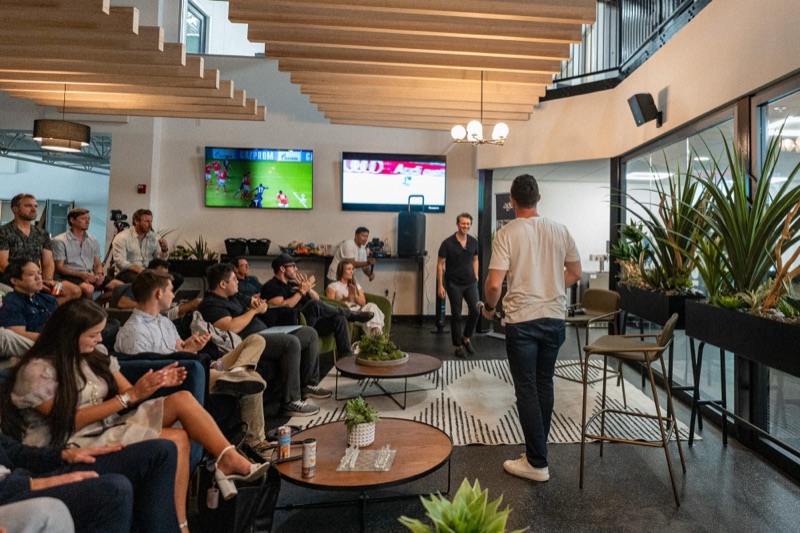
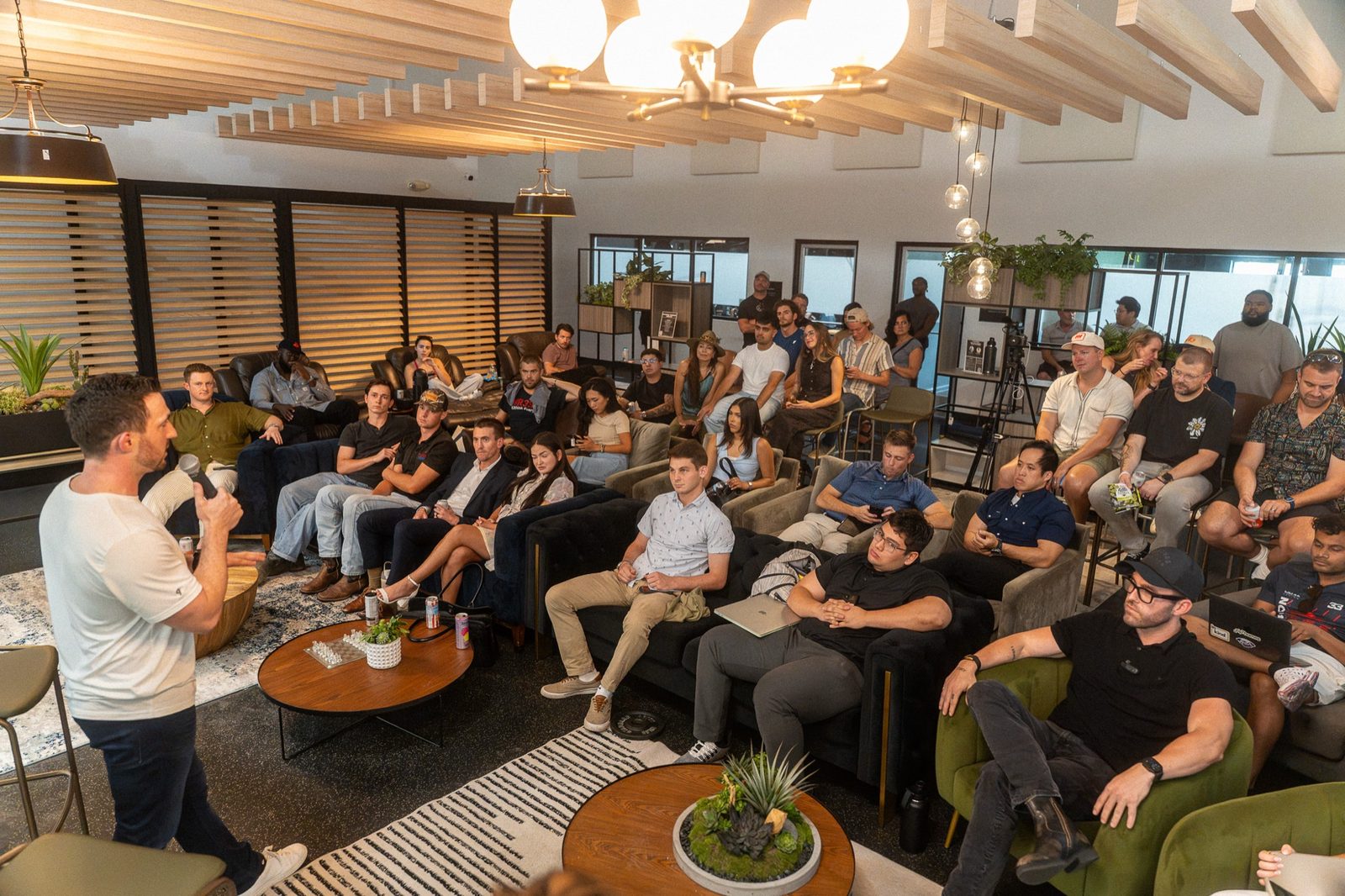
In Austin, Network of Directors takes this approach through a free monthly gathering designed around founder conversations rather than sales pitches. The event brings together entrepreneurs at different stages and centers each gathering around a founder-led interview and opportunities to connect with other business owners.
For founders looking to build business connections without sales pressure, the goal is not to stop talking about business. It is to create relationships before deciding whether there needs to be a transaction.
Strong Business Connections Start With Better Conversations
Networking can become transactional when people enter a room primarily looking for customers, referrals, or immediate opportunities. Introductions quickly become elevator pitches, and conversations are evaluated according to whether the person on the other side appears commercially useful.
That approach may work for direct business development, but founders often need a broader network.
A valuable connection might be another business owner who has already encountered a challenge you are facing. It could be someone building at a similar stage who understands your current pressures. It might even be a founder in an unrelated industry whose perspective causes you to approach a problem differently.
Those relationships are easier to discover when the first question is not, “Can I sell something to this person?”
Curiosity Creates More Meaningful Founder Conversations
Removing immediate sales pressure changes what founders can talk about.
Instead of spending the first several minutes explaining an offer, founders can ask about what another person is building, what has changed as the company has grown, or what problems are occupying their attention.
Conversations can naturally move toward subjects such as:
- Leadership and managing a growing team
- Business strategy and difficult decisions
- Lessons from previous successes and mistakes
- Challenges associated with different stages of growth
- Ideas, perspectives, and experiences from other industries
These topics reveal much more about another founder than a polished elevator pitch.
They also make the interaction useful even when neither person has anything to buy or sell.
Not Every Valuable Connection Has an Immediate Outcome
One of the limitations of highly transactional networking is the expectation that every conversation should produce something quickly.
Founder relationships do not always work that way.
Two entrepreneurs may meet without any immediate reason to collaborate. Months later, one may encounter a problem the other has already solved. Someone may make a useful introduction. A founder may need perspective on a decision and remember a conversation with someone who has relevant experience.
The value of the relationship can become clear long after the first meeting.
Allowing connections to develop without forcing an immediate outcome gives founders more opportunities to build a network based on experience and trust rather than short-term transactions.
Different Founder Experiences Make the Network More Useful
A useful founder network should not consist entirely of people running the same type of company at the same stage.
Different stages of entrepreneurship create different experiences. Someone launching a first business faces challenges that may feel familiar to a founder who has already built a company. A growing owner may be dealing with hiring, leadership, systems, or other issues that an experienced entrepreneur has previously navigated.
At the same time, established founders do not have a monopoly on useful ideas. Newer entrepreneurs can bring different technologies, customer expectations, business models, and approaches into the conversation.
Network of Directors is structured to bring entrepreneurs at different stages into the same room without requiring an application, invitation, or revenue threshold. The draft positions the event as a place where newer founders and established business builders can interact as peers.
Experience Can Be Shared Without Creating a Hierarchy
Business networking can become less useful when people spend most of their time identifying who has the biggest company, highest title, or most impressive exit.
Company size may provide context, but it does not have to determine whose conversation matters.
A founder who has already scaled a business may be able to share useful lessons with someone approaching that stage for the first time. A newer founder may introduce a different perspective that an established owner has not considered.
The relationship becomes more valuable when both people enter the conversation willing to listen.
Removing unnecessary hierarchy also makes it easier for founders to ask real questions. They do not need to pretend that everything is going perfectly simply because they are speaking with someone further along.
Different Business Stages Create Different Types of Value
The value a founder receives from networking may change depending on where they are in the business journey.
A newer entrepreneur may benefit from hearing how other founders approached early decisions. Someone growing an established business may want perspectives from owners who have already navigated expansion. A founder with significant experience may value meeting other builders, exchanging ideas, and staying connected to what entrepreneurs are currently working on.
The strongest conversations do not always happen between two people with identical backgrounds.
Sometimes the difference in experience is precisely what makes the connection useful.
Removing the Sales Pitch Gives Relationships Room to Develop
Sales conversations have a clear purpose. Networking relationships can be broader.
When someone immediately begins selling, the other person naturally evaluates the interaction through that lens. They begin deciding whether they need the product, whether the service fits, and how to end the conversation if it does not.
When the sales expectation is removed, both people have more freedom to explore whether there is a meaningful professional connection.
That does not mean business opportunities can never emerge from networking. It means they do not have to be the condition for starting the relationship.
At Network of Directors, the monthly gathering is built around founder interaction rather than a commercial presentation. The event is free, has no application or revenue requirement, and uses a founder-led stage conversation as a central part of the gathering.
Founder Stories Give the Room Something to Talk About
Starting a conversation with a stranger can be difficult when the only shared context is that both people attended the same networking event.
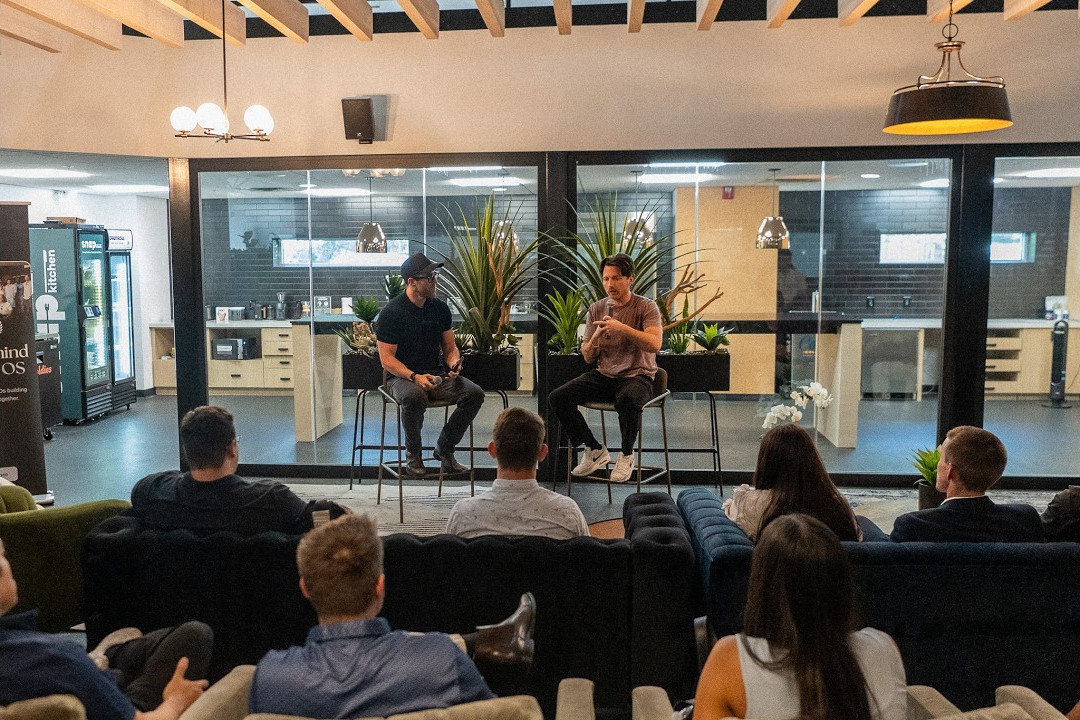
A founder interview gives the room a common experience.
Attendees can hear another entrepreneur discuss building a business and then carry ideas from that conversation into their own interactions. A lesson about leadership might lead two business owners to compare experiences. A discussion about growth may prompt someone to share a challenge they are currently facing.
The networking no longer has to begin with a generic “What do you do?”
There is already something meaningful to discuss.
This helps shift the focus from promoting businesses to exchanging experiences.
A No-Sales Expectation Changes the Tone of the Room
Clear expectations matter in networking environments.
If attendees expect constant pitching, they may approach every new conversation defensively. If the environment emphasizes founder interaction instead, people can participate differently.
Network of Directors frames its community around three simple principles:
No egos. No negativity. No sales.
Those principles support a room where the focus can stay on people, businesses, challenges, and lessons rather than status or immediate transactions.
Founders can still explain what they do. Understanding someone's business is an important part of getting to know them. The difference is that explaining the business does not have to become an attempt to close the person standing across from you.
Repeated Connections Can Become a Personal Board of Directors
Meeting another founder once creates a contact. Building a relationship takes more time.
Repeated interaction allows founders to understand one another beyond job titles and company descriptions. They begin learning what another person has experienced, where their knowledge is strongest, how they approach problems, and whether they offer a perspective worth returning to.
That is particularly valuable for entrepreneurs because founders frequently make decisions without having a large internal group of peers facing the same responsibilities.
Network of Directors describes this broader relationship-building idea as developing a personal board of directors.
A Personal Board Is Built Through Relationships
A personal board of directors is not the same thing as a formal corporate board.
The idea is to develop relationships with people whose experience and perspective can be useful as you build a company.
Different people may contribute different kinds of insight. One founder may understand scaling a team. Another may have experience building operational systems. Someone else may have gone through a business transition that another entrepreneur is approaching for the first time.
A founder's informal network might eventually include people with experience in:
- Starting and developing businesses
- Managing periods of company growth
- Building and leading teams
- Making difficult strategic decisions
- Navigating lessons from previous businesses
The objective is not to find one person with every answer. It is to develop relationships with people whose experiences provide different perspectives.
Trust Develops Through Repeated Interaction
One conversation rarely tells you whose judgment you should trust.
Repeated interaction provides more context.
You hear how another founder thinks about problems. You learn about decisions they have made. You see whether their perspective remains thoughtful when conversations move beyond surface-level topics.
Over time, the relationship can progress from “someone I met at an event” to “someone I would call when I need another perspective.”
That development is difficult to force.
A recurring founder community gives relationships time to grow naturally. Each gathering provides another opportunity to reconnect, continue a previous conversation, and meet other people through connections already made.
This is one reason monthly networking can be more useful than treating each event as an isolated opportunity to collect as many contacts as possible.
Founders Can Network Without Turning Themselves Into a Pitch
Building connections without sales pressure also depends on how founders approach the room.
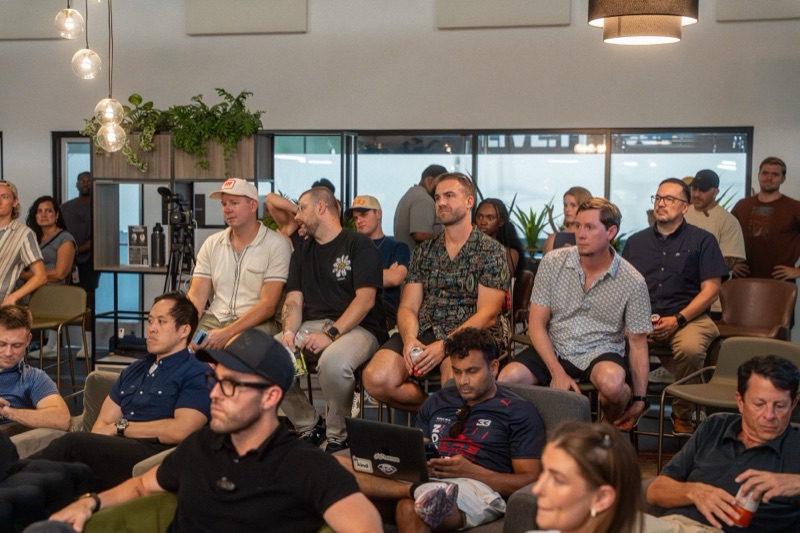
Even at an event without stage pitches, attendees determine the quality of individual conversations. A founder who treats every person as a prospect can recreate the same transactional environment they were trying to avoid.
A better approach begins with curiosity.
Rather than preparing only a polished explanation of your company, arrive with an understanding of what you want to learn and what kinds of people you would like to meet.
You should still be able to explain what you do clearly. But that explanation can provide context rather than function as the opening of a sales presentation.
Better Questions Lead to Better Connections
Questions give another founder room to talk about experiences that may never appear in a standard introduction.
Instead of asking only what someone does, try exploring how they built it, what they are focused on, or what has changed as the business developed.
Useful conversation starters might include:
- What are you working through in the business right now?
- What has changed most as your company has grown?
- What part of building the company has surprised you?
- What lesson took you longer than expected to learn?
- What idea from tonight's founder conversation stood out to you?
These questions are not scripts. They simply create openings for conversations that go beyond job titles and company descriptions.
Good networking is still conversational. Listen to the answer and allow the discussion to move naturally rather than rushing toward the next prepared question.
Quality Matters More Than the Number of Introductions
There is no requirement to meet everyone in the room.
Trying to maximize the number of introductions can actually prevent conversations from becoming meaningful. If you are constantly looking over someone's shoulder for the next person to meet, you may miss the connection already in front of you.
A few substantive conversations can be more useful than dozens of rushed introductions.
If someone has experience relevant to your business, stay in the conversation. If another founder offers an interesting perspective, explore it. If there is no immediate business opportunity but you enjoy the discussion, that does not make the interaction unsuccessful.
Business connections without sales pressure are built by allowing relationships to have value before demanding an outcome from them.
Build Founder Relationships Before Looking for the Transaction
The strongest founder networks are not necessarily built by meeting the greatest number of people or delivering the best elevator pitch. They are built by developing relationships with people whose experiences, perspectives, and judgment become useful over time.
Removing immediate sales pressure creates more room for that to happen.
Founders can discuss what they are building, share lessons, compare challenges, and learn from people at different stages without requiring every conversation to produce an immediate business result.
Network of Directors brings this approach to Austin through a free monthly gathering where founders and business owners can meet, hear real business conversations, and begin developing their own personal board of directors.
Show up ready to learn about the people in the room rather than sell to them, and the connections you build can become far more valuable than a stack of business cards.
Frequently asked questions
How can founders network without sounding like they are selling?
Start by treating the conversation as an opportunity to understand another founder rather than qualify a prospect. Explain your business when relevant, but ask about the other person's experiences, challenges, and perspective instead of immediately moving into an offer.
Can networking without sales pitches still lead to business opportunities?
It can, but an immediate business opportunity does not have to be the objective of every interaction. Founder relationships may later lead to introductions, collaborations, advice, or other opportunities as people become familiar with one another.
Who can attend Network of Directors in Austin?
The monthly event is designed for founders and business owners at different stages. There is no application, invitation requirement, or revenue threshold described for attending the gathering.
Is Network of Directors a paid networking group?
The monthly Austin gathering is free to attend. Its format is centered on founder interaction, a founder-led stage conversation, and relationship-building rather than a paid networking membership requirement.
What is a personal board of directors for a founder?
A personal board of directors is an informal network of founders, business owners, and other people whose experiences and perspectives you value. It is not a formal corporate board. The idea is to build relationships with people you can learn from as your business develops.
Why are recurring founder events useful for networking?
Recurring events give people opportunities to reconnect rather than relying on a single introduction. Over time, founders can learn more about one another's businesses, experience, and ways of thinking, which can help professional relationships become more meaningful.