
Founder networking should create space for useful conversations, shared experience, and relationships that continue beyond a single event. That becomes harder when every introduction feels like the beginning of a sales funnel.
Founders already spend much of their working lives selling. They pitch customers, explain ideas to partners, recruit employees, and communicate their vision to investors or stakeholders. When they enter a networking room, another sales conversation is not always what they need. Sometimes the most valuable interaction is simply talking with another business owner who understands the decisions, uncertainty, and responsibility that come with building a company.
Removing the sales pitch changes the purpose of the room. Instead of immediately evaluating what someone can buy or sell, founders can focus on what they can learn from one another. That approach is central to Network of Directors, an Austin founder community built around the idea of developing a personal board of directors through genuine relationships with other entrepreneurs and business owners.
Sales-Free Networking Creates Better Founder Conversations
Traditional networking can become transactional quickly. Someone introduces themselves, explains what their company does, and begins looking for a potential customer, referral, or opportunity. There is nothing inherently wrong with business development, but when everyone enters the room with that objective, conversations can become predictable.
Founder networking works differently when selling is removed from the immediate interaction.
Instead of thinking, “Can this person become a client?” founders can ask more useful questions. What has this person learned? What stage of business are they navigating? Have they encountered a challenge similar to mine? What perspective might they have that I have not considered?
That shift creates room for conversations about the realities of entrepreneurship rather than polished sales messaging.
Conversations Can Move Beyond the Elevator Pitch
An elevator pitch is useful when someone needs to understand a business quickly, but it reveals very little about the person building it.
Founder-to-founder conversations can go much deeper. Business owners can talk about decisions that worked, ideas that failed, difficult transitions, growth challenges, leadership, hiring, strategy, and the lessons they learned while building their companies.
Those conversations are especially useful because entrepreneurship rarely follows a perfectly clean path. Hearing how another founder approached a difficult decision can provide context that a standard networking exchange cannot.
The goal is not to eliminate conversations about business. It is to make those conversations more meaningful than a sequence of sales pitches.
Trust Has Time to Develop Naturally
Strong professional relationships rarely form because two people exchanged business cards once. They develop through repeated conversations and gradually learning how another person thinks, communicates, and approaches problems.
Removing immediate sales pressure gives those relationships room to develop.
A founder may meet someone without any obvious reason to work together. Months later, that person could become someone they call for advice, introduce to another entrepreneur, collaborate with, or simply trust as a sounding board.
Not every conversation needs an immediate business outcome to have long-term value.
Different Stages of Business Create More Valuable Connections
Founder networking becomes more useful when everyone in the room is not at exactly the same stage.
A new entrepreneur may be trying to make decisions that another founder faced several years earlier. An established business owner may benefit from the perspective of someone building with newer tools, markets, or operating models. Experienced founders can share lessons from businesses they have already built, while growing founders bring current challenges and ideas into the conversation.
Network of Directors intentionally brings together entrepreneurs at different stages rather than requiring everyone to meet a particular revenue threshold before participating.
Experience Can Move in Both Directions
It is easy to assume that networking value flows only from the most experienced founder to the least experienced person in the room. In practice, useful insight can move in either direction.
A founder who has already scaled a company may understand hiring, leadership, operations, or growth in ways that help someone building their first business. At the same time, newer entrepreneurs may bring different technologies, customer behaviors, marketing approaches, or ways of thinking about an established problem.
A productive founder room recognizes that everyone can contribute something.
This makes conversations less about status and more about perspective.
Open Participation Reduces Unnecessary Hierarchy
Network of Directors does not require an application, invitation, or minimum revenue level for its monthly Austin event. That open structure allows founders and business owners at different stages to participate in the same room.
A founder still developing an early-stage business can have a conversation with someone running an established company without needing to prove that they belong there first.
That matters because some of the most useful professional relationships begin before there is an obvious commercial reason for them to exist.
When the room is not organized around hierarchy, founders can focus more on the quality of the conversation than the size of the company represented on the name tag.
Founder Stories Create a Better Starting Point for Networking
Walking into a room full of strangers and immediately beginning conversations can feel forced, even for experienced business owners. Giving everyone a shared experience first can make networking much more natural.
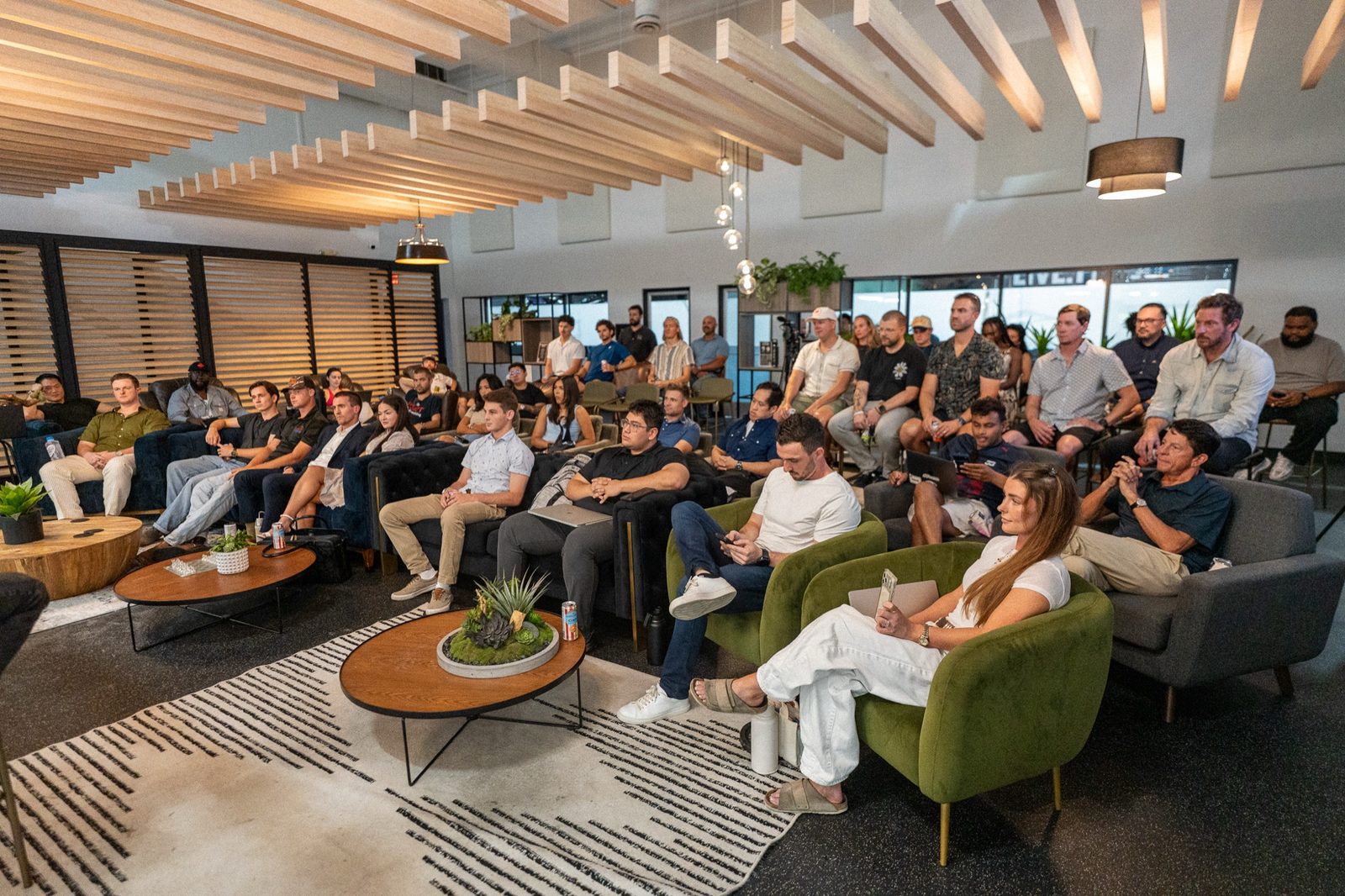
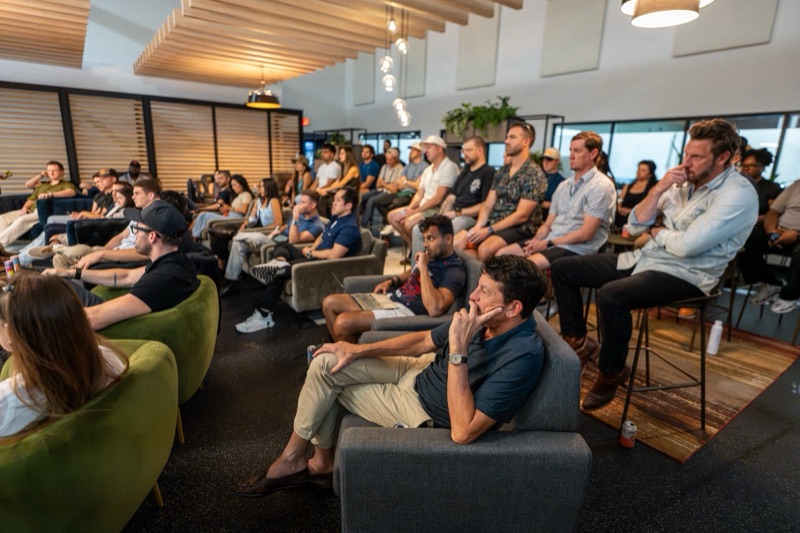
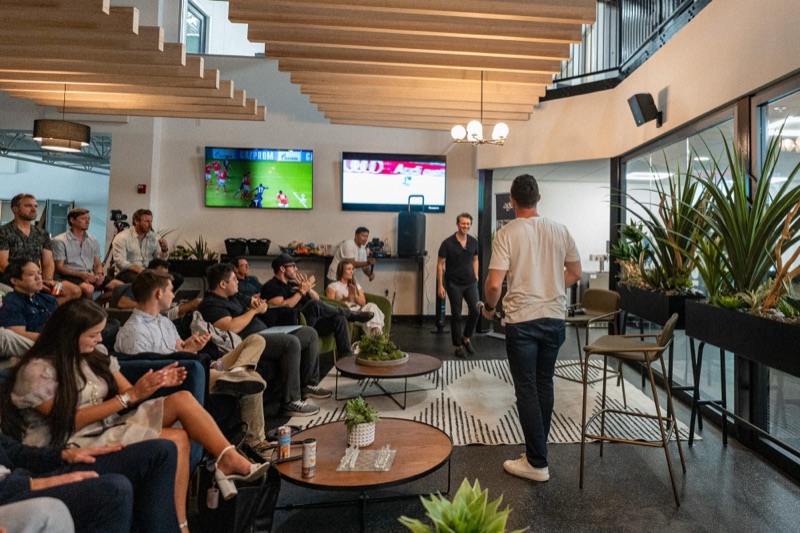
At Network of Directors, the monthly Austin gathering includes a live interview with a founder or business leader. The conversation focuses on the experience of building a business rather than turning the stage into a product pitch.
That format gives attendees something meaningful to discuss once the structured portion of the event ends.
Real Business Lessons Create Common Ground
Founder stories are useful because they create conversation starters that go beyond “What do you do?”
Someone may hear an interview about growth and begin discussing a similar challenge with another attendee. A conversation about leadership may lead two founders to compare how their roles changed as their companies developed. A lesson about a difficult business decision can prompt another entrepreneur to reconsider a problem they are currently facing.
The interview becomes shared context for the room.
That can make the networking portion feel less like a series of cold introductions and more like a continuation of a conversation everyone has already been part of.
The Stage Sets the Tone for the Room
What happens on stage influences what happens afterward.
If the presentation is primarily a sales pitch, attendees may naturally enter subsequent conversations expecting more selling. If the stage is used for an honest discussion about building a business, the room receives a different signal.
At Network of Directors, speakers and sponsors are not there to sell from the stage. The focus remains on founder experiences, lessons, and conversations that other entrepreneurs can learn from.
That supports a broader philosophy reflected in the community's three simple rules:
- No egos
- No negativity
- No sales
Those expectations help establish the kind of founder networking the event is designed to encourage.
Repeated Networking Builds a Personal Board of Directors

One good networking conversation can be useful. A network of people whose judgment you understand and trust can be considerably more valuable over the course of building a company.
That is the idea behind a personal board of directors.
This does not mean creating a formal corporate board. It means developing relationships with founders, operators, and business owners who bring different experiences and perspectives to the problems entrepreneurs encounter.
A founder might know one person who has already scaled a team, another who understands marketing, another who has navigated an exit, and another who is currently solving a similar operational problem. Over time, those relationships create a network of people the founder can learn from.
Relationships Become More Useful Through Repeated Interaction
Trust is difficult to establish during a five-minute conversation.
Meeting people repeatedly gives founders an opportunity to move beyond introductions. They begin learning what others have built, what problems they have solved, how they make decisions, and where their experience may be relevant.
That context matters when advice is needed.
A recommendation from someone whose judgment you have observed over time carries different weight from advice offered during a first conversation.
Monthly founder networking creates opportunities for those relationships to develop gradually rather than forcing every interaction to produce an immediate result.
A Strong Network Is Broader Than a Contact List
Collecting contacts and building relationships are not the same thing.
A large contact list may contain hundreds of names without giving a founder anyone they would actually call when facing a difficult decision. A smaller group of meaningful relationships can provide far more practical value.
A personal board of directors is built through connections where founders understand one another's experience and are comfortable having real conversations about business.
That is why networking without constant pitching can be so effective. When the immediate objective is not to close a deal, there is more space to discover who someone actually is and what perspective they bring.
Austin Founders Benefit From Networking Built Around Community

Austin has no shortage of entrepreneurs, business owners, operators, and people building new companies. Bringing those people into the same room creates an opportunity, but simply gathering a crowd does not automatically create useful networking.
The environment matters.
Network of Directors hosts a free monthly, two-hour gathering at North Kollective at 9185 Research Blvd in Austin. The event is open to founders and business owners without an application process, invitation requirement, or revenue threshold.
The format combines a founder conversation with time for attendees to meet and talk with one another. Golf simulator activities and contests are also part of the event experience, but attendees do not have to participate in them to attend.
Less Pressure Makes Room for Curiosity
A networking conversation changes when neither person is trying to reach a predetermined outcome.
Founders can ask questions because they are genuinely interested in the answer. They can discuss an unfamiliar industry without wondering whether they qualify as a prospect. They can introduce two people simply because the connection makes sense.
That kind of curiosity helps people discover relationships they might otherwise overlook.
A conversation that appears commercially irrelevant today may become valuable later as businesses, roles, and challenges change.
Community Develops Through Participation
The strongest founder networks are rarely built during a single evening.
They develop when people return, recognize familiar faces, continue previous conversations, and meet new founders along the way. Repeated participation transforms networking from a collection of introductions into an actual community.
That distinction matters.
A networking event can help someone meet people. A founder community can help them develop relationships with people whose experiences become increasingly relevant as their business changes.
Removing the constant expectation to sell gives those relationships more room to grow.
Build Founder Relationships Without Turning Every Conversation Into a Pitch
The best founder networking does not have to begin with a sales objective. It can begin with curiosity, shared experience, and a willingness to learn from someone building at a different stage.
Removing the sales pitch gives founders more room to discuss what actually matters: decisions, challenges, lessons, growth, and the realities of running a business. Over time, those conversations can develop into the relationships that make up a valuable personal board of directors.
Network of Directors brings that approach to Austin through its free monthly gathering at North Kollective. Founders and business owners can join the room, hear real business conversations, meet entrepreneurs at different stages, and start building relationships without having to arrive with a pitch.
Frequently asked questions
What makes founder networking different from traditional business networking?
Founder networking centers conversations around the experience of building and running businesses. Discussions can include leadership, growth, strategy, setbacks, decision-making, and lessons learned rather than focusing primarily on exchanging referrals or making sales.
Does Network of Directors allow sales pitches?
Network of Directors operates around the principles of “No egos. No negativity. No sales.” Speakers and sponsors do not sell from the stage. The event is designed to encourage founder conversations and relationship-building rather than turning the gathering into a sales presentation.
Who can attend Network of Directors in Austin?
The monthly event is open to founders and business owners at different stages. There is no application, invitation requirement, or minimum revenue threshold to participate.
Is Network of Directors a paid networking group?
The monthly Austin event is free to attend. It is designed as an accessible founder gathering rather than a paid networking membership requirement.
What happens at a Network of Directors event?
The monthly gathering runs for approximately two hours and includes opportunities to meet other attendees, a live founder or business interview, and open networking. The event also includes golf simulator activities and contests, although participating in golf is not required.
What does building a personal board of directors mean?
A personal board of directors is an informal network of founders, business owners, and operators whose different experiences and perspectives can help an entrepreneur think through challenges and decisions. It is not the same as forming a formal corporate board.