Not a run club
How to build a community people plan their week around
Griffin Wooden, founder, Good Pain Athletics. Interviewed by Connor Cullip at the Network of Directors room in Austin, Texas, on May 22, 2026.
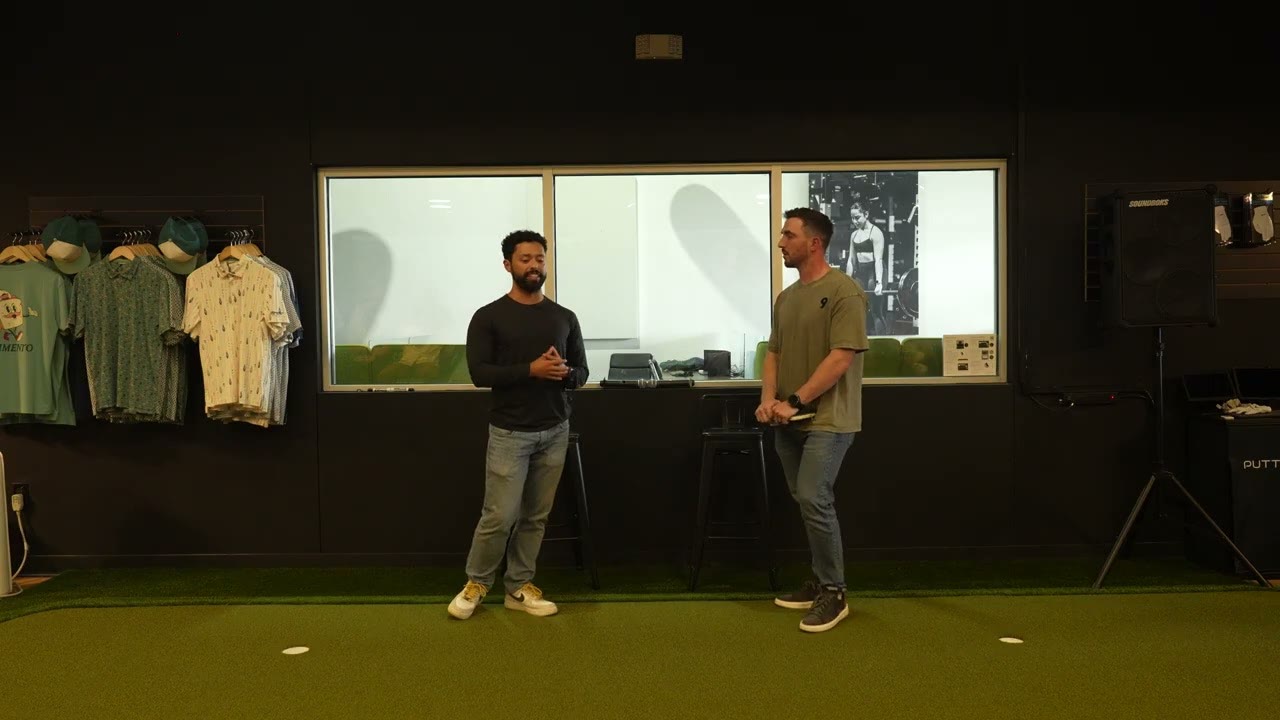
Recorded
May 22, 2026
At the room, Austin
Format
Fireside
Interviewed by Connor Cullip
Runtime
15 minutes
Filmed by Jacob Mizell
In short
Connor admitted he took the line for this room from Griffin Wooden. Griffin says Good Pain is not a run club, it is training, and Connor's first event said the same about networking. Griffin started with one text to five friends the night before a track workout he was nervous to run alone. Within four months it was 35 to 40 people. Now there are five pace groups, a group in Los Angeles, and strangers in other states doing the workout he posts on Monday. He told the room how he picked one reason to show up, handed off the work, and learned to say no to brands.
People come to Good Pain for a fundamentally different reason.
What came up from the stage
The places and partners Griffin named, in the order they came up. None of these are sponsors.
Good Pain Athletics
Griffin's training group in Austin, now with a group in Los Angeles.
In this talkThe whole talk: five friends at a track that became five pace groups and hundreds of runners.
ProfileZilker Park
The Austin park where the group trains now.
In this talkWhere they landed after the track got too small and too expensive, and why the group grew faster off the track.
Ghost Hydration
The first brand that asked to come out to a run.
In this talkThey showed up with a crew and used his runners and the Good Pain name in their marketing. It taught him to protect the group.
Atlanta Run Club
A large running club whose founder gave Griffin advice.
In this talkPitch brands on content you can make for them, not on handing out samples.
What to take from it
- 01Give one clear reason to come.Plenty of clubs run easy social miles. Good Pain is the hardest run of the week, and people plan around it.
- 02Start with a text.No business plan. Five friends, one workout, and it grew to 35 to 40 people in about four months.
- 03The place is not the product.Kicked off the track, the group grew faster in a park. People came for the shared effort, not the track.
- 04Hand off the work.Pace group leaders, a merch seller and steady photographers now run what Griffin used to do alone.
- 05Protect your people.One brand turned a run into a free photo shoot. Now he is careful who gets in front of the group.
- 06Sell content, not samples.Brands have more money for marketing than for samples. Offer what they cannot shoot cheaper themselves.
Top three action items
Where to start this week, straight from what Griffin told the room.
Name the one reason to show up
Write down what your group or business does that nobody nearby does. Make that the thing you are known for.
Hand one job to someone else
Pick a task you still do yourself every week, like photos or merch, and give it to a regular who wants to help.
Set your rule for partners
Before the next brand calls, decide what you will offer them and what they cannot take from your people.
The short answer: give people one clear reason to come that nobody else offers, then show up for them every week. Griffin Wooden grew Good Pain Athletics from a text to five friends into five pace groups by making it the hardest workout of the week, not another social run. He handed the work to leaders from the group, and he protects his people from brands that only want to use them.
Who is Griffin Wooden
Griffin Wooden runs Good Pain Athletics, one of the largest training groups in Austin. It now has five pace groups and a group in Los Angeles. Connor opened by admitting he borrowed Griffin's line for this room. The first time Connor showed up at 6 in the morning, he said, he expected a wall of ego from runners doing five and six minute miles. Instead people walked up and asked his name.
Unlike Alec, I did not have a 10 page business plan.
How did Good Pain start?
Griffin had just signed up for coaching to run a fast New York City Marathon. His coach gave him track workouts at paces he was scared to try. Flying home from Chicago, he texted five friends: he was doing the workout tomorrow, come hit the track. They came. In about four weeks there were 15 to 20 people. In about four months there were 35 to 40, mostly from people posting stories and an Instagram page.
He was missing the group he ran with in New York, a lot of former college athletes who still wanted to run hard. Austin had plenty of social clubs running easy miles. He wanted the other thing.
What makes a community different from the others?
Griffin was clear that easy social runs have their place. He goes to them. But Good Pain is built for something else, and that is why it has a following.
People plan their entire workout routines around: come hell or high water, I'm at Good Pain Tuesday and I'm getting in that workout. It's probably my hardest run of the week.
His advice was to pick the thing that sets you apart, get good at it, and offer it well. He still has moments where he cannot believe it. The first workout that hit a hundred people. The day there were too many runners for one pace group. A run club in Georgia doing his workout the same day he posted it.
What happens when you lose the place you started?
Good Pain began as a track club. Then it got so big it got kicked off the track, and they wanted about $1,100 a week to keep using a public track. Griffin said he would find somewhere else. For about a month and a half the group bounced around Austin, drawing police complaints for blocking school drop off and for 200 people parking in front of houses. They landed at Zilker Park, where there is room to park.
People are craving a place where they can go and shared effort is celebrated.
The scare made him ask what Good Pain actually is. The answer: the group grew more after it left the track. People come because the runners around them push harder and hold them to it.
How do you grow a community without doing everything yourself?
Connor asked what made Good Pain different beyond the training. Griffin said it comes down to showing up for people every week, so they know he is all in on them. The other half is giving people in the group real roles.
At the first events he did everything himself: photos, video, leading the run and pointing people where to turn. Now pace group leaders help plan events, one runner sells the merch and has the store login, and photographers come out on a regular basis. He can step back, and it has grown past him.
How do you keep brands from using your community?
Connor asked this as a personal question, since people now offer him money to pitch from this stage. Griffin had two stories. The first brand that called was Ghost Hydration. They said they just wanted to hand out electrolytes. They came with a cooler, two photographers and two videographers, and turned the run into a photo shoot. A few weeks later Griffin saw his runners and the Good Pain name all over their main page.
I totally just let them come in and take advantage of my people and use our name and likeness and our image and market with that.
Since then he has been much more careful about who gets in front of the group. Connor said he has asked about five times himself and Griffin politely says no every time. The second story came from the founder of Atlanta Run Club. Griffin was getting paid per can to hand out an energy drink, and the founder told him his pitch was off. Brands have a small budget for samples and a much bigger one for marketing.
Hey, I can make sick content, high quality, that you can use in your marketing, with more runners than you could afford to do a photo shoot with yourself. And I can do it cheaper than you can execute. That's a real pitch to a brand.
What comes next for Good Pain?
Asked where he sees it in ten years, Griffin laughed that he still needs a business plan. The goal is more cities: Austin, Los Angeles, then New York. Merch has sold out every time, and runners in other states are asking to buy it. Some big brands have talked about working together. His worry is choosing the partner who wants to do right by the group, not one whose demands come first.
Connor pushed back on the business plan and asked the room who could help. Hands went up. That is the point of the room, he said: name your biggest struggle and sit down with someone who has solved it.
Quotes are from the recording, trimmed of filler. Nothing is added.
Frequently asked questions
What is the main idea of Griffin Wooden's talk?
Give people one clear reason to show up that nobody else offers, show up for them every week, hand real roles to people in the group, and protect them from brands that only want to use them.
How did Good Pain Athletics start?
Griffin Wooden texted five friends to join him for a track workout he was nervous to run alone. It grew to 15 to 20 people in about four weeks and 35 to 40 in about four months, mostly by word of mouth and Instagram.
What makes Good Pain different from a run club?
Most run clubs in Austin run a few easy social miles. Good Pain is a hard training session, often the hardest run of the week, with five pace groups so everyone is pushed.
How should a community work with brands?
Be careful who gets in front of your people. Griffin's lesson was to pitch brands on high quality content made with your community, which they pay for out of a bigger budget, instead of handing out samples.
Who is Griffin Wooden?
Griffin Wooden is the founder of Good Pain Athletics, an endurance training group in Austin that now runs five pace groups and a group in Los Angeles.
About Griffin Wooden
Founder of Good Pain Athletics, one of the largest training groups in Austin, with five pace groups and a group in Los Angeles. He started it with a text to five friends the night before a track workout.
Griffin Wooden's full profileConnor Cullip, who interviewed him
More voices from the room
Founders and operators who have taken the mic at Network of Directors in Austin.


Come to the next one
Friday, October 23, three to five in the afternoon, Austin. Free.
Save your seat