Speaker
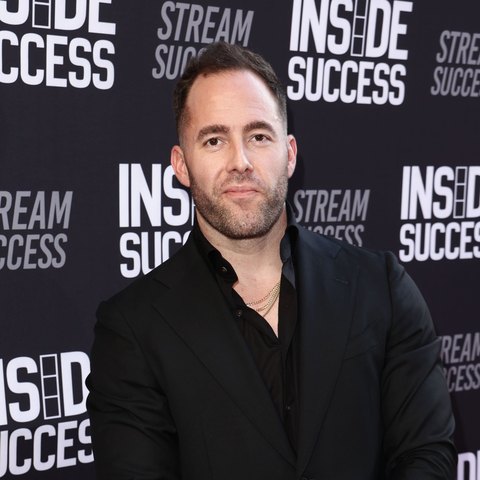
Justin Day
Founder of SwarmSystem. He makes a local business the name that comes back when a customer asks Google, Maps or an AI assistant who to call. Ten years running his own agency, more than a hundred million dollars in results for clients, and a TEDx talk on where AI is taking all of it. He has been in the room at Network of Directors in Austin.
Role
Founder, SwarmSystem
AI and search visibility
Also built
Day by Day Digital
Ten years, seven figures
On stage
TEDxSouthlake
Will AI Take Over the World?
Find Justin online
Most of what he does is free to look at. The two scans below will tell you in a couple of minutes whether your own business is showing up, and the TEDx talk is nine minutes.
SwarmSystem Siri Score Invisible Business Scan Visibility Quest AI Marketing Tools Day by Day Digital His TEDx talk
The short version: Justin Day has run his own agency for ten years and has driven more than a hundred million dollars in results for the people who hired him. He built it from a one-man video shop up to a thirty-person full-service agency, then did the unusual thing and cut it back down to one service he could be the best at. That service is SwarmSystem. It answers a question every owner in this room now has: when a customer asks Google, or Siri, or ChatGPT, who to call, does your name come up, and if not, what is that costing you.
Who is Justin Day
Justin Day is the founder of SwarmSystem and of the agency behind it, Day by Day Digital. He did not come to this from a marketing textbook. Both of his parents ran businesses and owned marketing agencies, and he started out working at his mother's agency in downtown Dallas, learning on real clients with real budgets and real pressure. When that agency closed he had the usual choice in front of him, get a job or keep building. He kept building, and the ten years since have run on word of mouth and results rather than on pitching.
He is based in Austin and his clients are mostly home service companies, the HVAC, plumbing, electrical and roofing businesses that live or die on the phone ringing. It means he spends his days translating technical work into plain English for people who have been pulling pipe for twenty years, which is a useful habit to have in a room full of founders.
The ten years before SwarmSystem
The business started as one person with a camera. Video production and editing, for friends and family at first, then for anyone who would pay. Then he added website design, then graphic design. Then search, then Facebook ads, then social, then email. Each one got bolted on because a client asked for it, which is how most agencies grow, and it worked. Day by Day Digital reached thirty employees and multiple seven figures in revenue as a full-service shop.
Two years ago he took it apart on purpose. Being full-service meant being competent at nine things and the best at none of them, and he had watched enough agencies sell a pile of deliverables that never added up to a result. So he cut back to the one thing he could be genuinely great at and built a system around it. That decision is the reason SwarmSystem exists, and it is the part of his story that tends to land hardest with other founders, because almost nobody wants to voluntarily shrink a company that is working.
What SwarmSystem actually does
The plain version: when a homeowner needs a plumber, they no longer just type it into Google. They ask Siri. They ask ChatGPT. They ask Gemini, or Perplexity, or Copilot, or whatever is built into their phone this year. Each of those gives back a short list, usually three names. If you are not on that list, you did not lose the job on price or on service. You were never in the running.
Most agencies optimize for Google and stop there. SwarmSystem works across the places people actually ask, which today means ChatGPT, Gemini, Perplexity, Claude, Grok, Copilot and Google's AI Mode alongside classic search and Maps. The work itself is unglamorous and it is all connected: the technical side of the site, the content, the citations, the name and address consistency, the Google Business Profile, the digital PR. Justin's position is that doing three of those and calling it SEO is exactly why so many owners have paid an agency for a year and have nothing to show for it.
The other half is proof. He connects a client's CRM to their analytics so the report shows revenue by channel rather than traffic and rankings. He is blunt about why: an owner who cannot see what their money bought will leave eventually even if the results were good, because confusion feels the same as being ripped off. Clients own every asset he builds for them, and the agreements are month to month, so leaving is easy. He treats that as the accountability mechanism rather than a weakness.
The free tools he built
Rather than describe the problem, he built things that show you the problem on your own business, free and without a call.
Siri Score is the front door. Put in a business and it scores whether the assistants and search engines actually know about you, and where you are getting skipped. The Invisible Business Scan is the longer version of the same idea, a report on why a business is not showing up across Google, Maps and AI search. Visibility Quest is the one that gives away how he thinks: a five-minute browser game styled like an old Game Boy, where you pick your trade and start out as a see-through ghost nobody can find, and you have to earn your way into being visible. It is a lead magnet, and it is also the clearest explanation of the whole business anyone has managed in five minutes.
He also owns and runs AI Marketing Tools, a directory of close to a thousand AI marketing tools, which doubles as his own running survey of what is actually shipping in the space.
What he believes about getting found
A few things come up every time he talks about this work.
Search is data, not opinion. Either you can read what the numbers say and act on it, or you are guessing and calling it experience. There is no in my experience when there is evidence sitting right there.
It only works holistically. The technical work, the content, the citations, the profile, the PR, all of it moving together. Pick two and you get nothing, which is most of the industry.
If you cannot tie it to revenue, do not report it. Traffic is not a win. Rankings are not a win. The phone ringing with the right kind of job is a win.
Speed counts. More content, more posts, more citations, done faster. Most agencies are slow, and execution velocity turns out to be a real and durable advantage.
And for emergency trades especially, showing up at the top is close to the whole game. The plumber above you gets the call. The one below you does not, no matter how good they are.
His TEDx talk
In November 2025 he gave a talk at TEDxSouthlake called Will AI Take Over the World?, delivered at the Frontiers of Flight Museum in Dallas as part of the event's sixth year. It runs nine minutes. It is less about marketing than about what happens to ordinary businesses and ordinary work as these tools get good, which is the same question underneath everything else he does.
What he has built
The company, the agency behind it, and the free tools anyone can go use.
SwarmSystem
Builds owned search and AI visibility for local service businesses, so the company is the one recommended when a customer asks who to call.
His roleFounder. He created it after cutting a full-service agency back to one service.
Visit AgencyDay by Day Digital
The agency he started as a one-man video shop and grew to thirty people and multiple seven figures before narrowing it down.
His roleFounder, ten years. More than a hundred million dollars in results for clients.
Visit Free toolSiri Score
A free scan that scores whether the assistants and search engines know your business exists, and shows where you are getting skipped.
Why it mattersIt takes a couple of minutes and tells you if you are in the running at all.
Get your score Free toolInvisible Business Scan
The longer report on why a business is not showing up across Google, Maps and AI search, and what is behind it.
Why it mattersIt names the specific reasons, not a grade. No call required.
Run the scan GameVisibility Quest
A five-minute browser game in old Game Boy style. Pick your trade, start as a ghost nobody can see, and earn your way into being found.
Why it mattersIt explains the whole business faster than any deck he has built.
Play it DirectoryAI Marketing Tools
A directory of close to a thousand AI marketing tools, sorted by what they actually do.
His roleOwner. It doubles as his running survey of what is really shipping.
BrowseMore voices from the room
Founders and operators who have taken the mic at Network of Directors in Austin.




Come to the next one
Friday, September 25, three to five in the afternoon, Austin. Free.
Save your seat