
Running a business involves making decisions that do not always have clear answers. From hiring employees and managing operations to developing growth strategies, founders regularly face challenges that require judgment, experience, and careful planning.
While personal experience plays an important role in entrepreneurship, learning from other business owners can provide perspectives that are difficult to develop independently.
Sharing business insights among founders creates opportunities to understand how other entrepreneurs approach challenges, evaluate decisions, and learn from their experiences. A conversation with someone who has already navigated a similar situation can introduce ideas worth considering before making an important business decision.
Austin has a growing community of entrepreneurs with different professional backgrounds, business models, and levels of experience. Connecting with these individuals can help founders expand their knowledge while developing meaningful professional relationships.
The most valuable conversations are not necessarily about immediate business opportunities. They are often about understanding what other founders have learned, which decisions shaped their businesses, and how those experiences might apply to different situations.
Why Sharing Business Insights Matters for Austin Founders
Entrepreneurship can become isolating, particularly when founders are responsible for making most of their company's important decisions.
Employees, customers, and business partners may offer useful feedback, but their perspectives are not always the same as those of someone who has personally experienced the responsibilities of business ownership.
Other founders understand the uncertainty involved in making decisions without knowing the outcome. They may have encountered similar challenges related to managing teams, allocating resources, building customer relationships, or adjusting business strategies.
Exchanging experiences with these entrepreneurs can help business owners evaluate their own situations more thoroughly.
Learning From Real Business Experiences
General business advice can provide useful principles, but practical experiences often reveal how those principles work under different circumstances.
For example, a founder considering their first employee may benefit from speaking with someone who has already built a team.
That conversation might explore:
- How the founder determined when hiring became necessary
- Which responsibilities they delegated first
- What challenges appeared during the hiring process
- How their leadership responsibilities changed
- What they would approach differently today
These insights do not provide a universal hiring strategy. Every business has different resources, requirements, and priorities.
However, they can help the founder identify questions that deserve attention before moving forward.
The same principle applies to decisions involving pricing, business operations, expansion, and customer relationships.
Recognizing Challenges Before They Become Larger Problems
Founders are often focused on immediate responsibilities. That can make it difficult to recognize how today's decisions may influence the business later.
An entrepreneur who has already experienced a period of rapid growth may recognize operational challenges that a newer founder has not yet encountered.
Similarly, a business owner who has navigated changing customer demand may offer perspective on the importance of reviewing assumptions before committing additional resources.
These conversations help founders think beyond their immediate circumstances.
Rather than relying exclusively on trial and error, entrepreneurs can consider lessons from people who have faced comparable situations.
The goal is not to avoid every mistake. It is to develop a broader understanding of the decisions and trade-offs involved in building a business.
Different Founder Experiences Create Valuable Perspectives
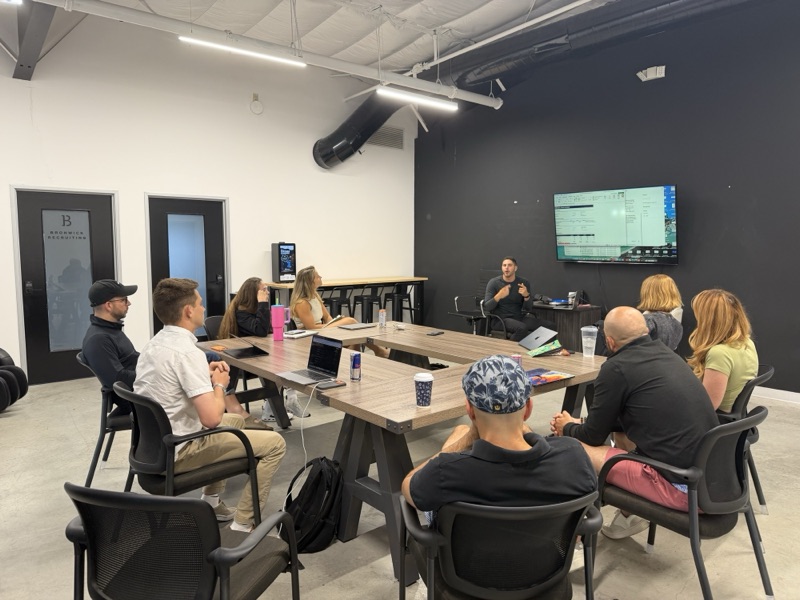
Business owners do not all follow the same entrepreneurial path.
Some founders are developing their first companies. Others manage established businesses, lead growing teams, or have already built and sold companies.
Each stage brings different responsibilities, priorities, and lessons.
When entrepreneurs from these backgrounds interact, they can learn from experiences that differ from their own.
Early-Stage Founders Gain Perspective on Future Challenges
Founders in the early stages of business ownership often concentrate on establishing their operations, attracting customers, and developing reliable sources of revenue.
They may also be learning how to balance competing responsibilities while determining which activities deserve the most attention.
Connecting with experienced business owners can provide insight into how these challenges evolve.
An established founder might explain how they transitioned from handling everything personally to delegating responsibilities. Another may discuss the importance of developing consistent processes before pursuing additional growth.
These conversations help newer entrepreneurs understand that business challenges change as companies develop.
They also provide opportunities to learn which decisions deserve careful consideration at an early stage.
Experienced Founders Benefit From New Approaches
Insight sharing should not move in only one direction.
Established entrepreneurs can also learn from founders who are building companies under different circumstances.
Newer business owners may be experimenting with emerging technologies, alternative business models, or different approaches to customer engagement.
An experienced founder may discover a useful perspective by listening to someone who approaches a familiar problem differently.
For example, an entrepreneur who has managed a traditional service business for years may benefit from hearing how a newer founder organizes customer communication or internal workflows.
The value comes from understanding the reasoning behind another approach rather than assuming it will work for every company.
A founder network that includes different experience levels creates opportunities for everyone to contribute.
Honest Founder Conversations Encourage Practical Learning
The environment in which business conversations take place can influence how much participants learn.
When networking focuses primarily on sales presentations or immediate transactions, entrepreneurs may spend more time promoting their businesses than discussing their actual experiences.
That approach can make it difficult to explore challenges, lessons, and decisions in meaningful detail.
A conversation centered on learning creates a different experience.
Founders can ask questions, discuss challenges, and share perspectives without needing to turn every interaction into a business opportunity.
Conversations Without Sales Pressure
Sales-focused networking has its place, particularly when entrepreneurs are actively seeking customers or commercial partnerships.
However, founders looking for peer insight may benefit from environments where selling is not the primary objective.
Without the expectation of an immediate transaction, conversations can explore subjects such as:
- Difficult decisions made during company growth
- Lessons from unsuccessful strategies
- Changes in leadership responsibilities
- Challenges related to hiring and delegation
- Different approaches to managing business operations
These discussions can reveal the reasoning behind decisions rather than focusing only on their outcomes.
A founder who openly discusses a difficult business experience may provide more practical insight than someone describing only their achievements.
Honest conversations also allow entrepreneurs to recognize that many business challenges are shared across industries and company sizes.
Learning Through Founder Interviews
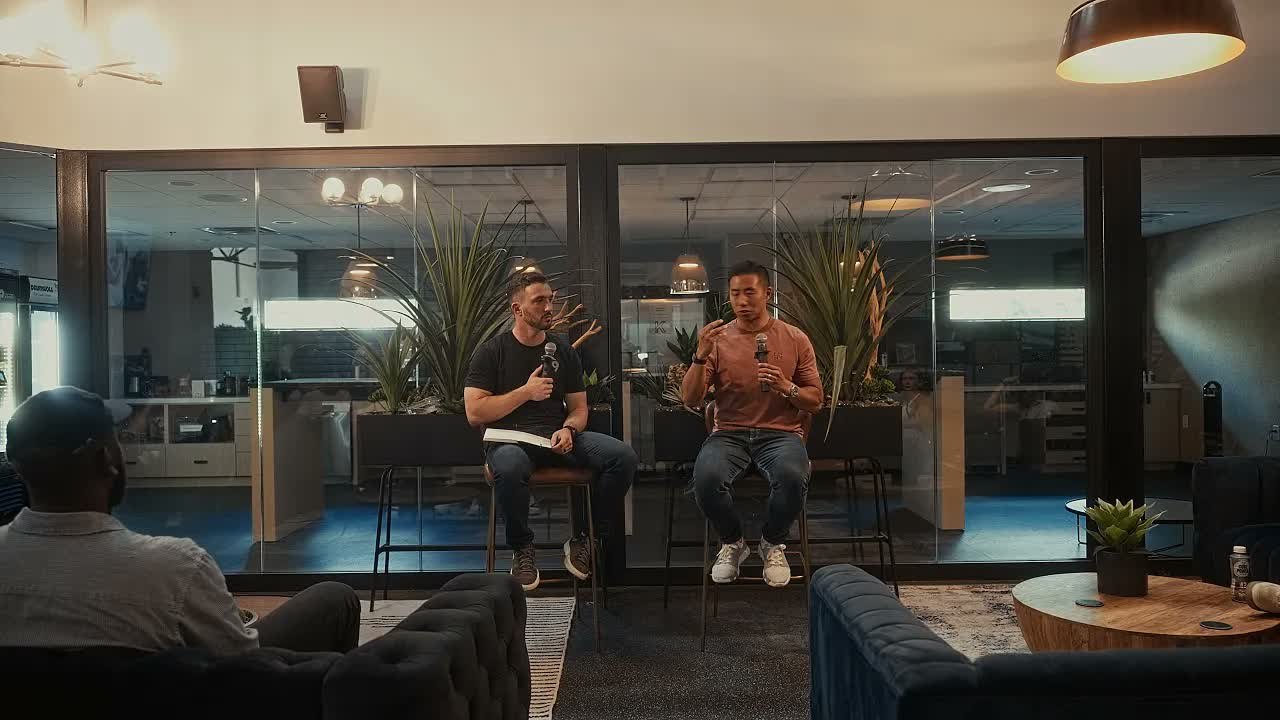
Founder interviews offer another opportunity to learn from entrepreneurial experiences.
A conversation with someone who has built a business can explore the decisions, challenges, and turning points that shaped their journey.
Unlike a traditional presentation focused on delivering a prepared message, an interview can examine the details behind specific experiences.
Attendees may hear how a founder approached an unfamiliar problem, adjusted a strategy, or responded when circumstances changed.
These stories can encourage listeners to reflect on their own businesses.
For Austin entrepreneurs, attending founder-led discussions can also provide common ground for conversations afterward. Participants may connect over a particular lesson, ask additional questions, or share how a similar situation developed within their own companies.
The interview becomes a starting point for further learning rather than the entire experience.
Building Meaningful Relationships Through Peer Insight Sharing
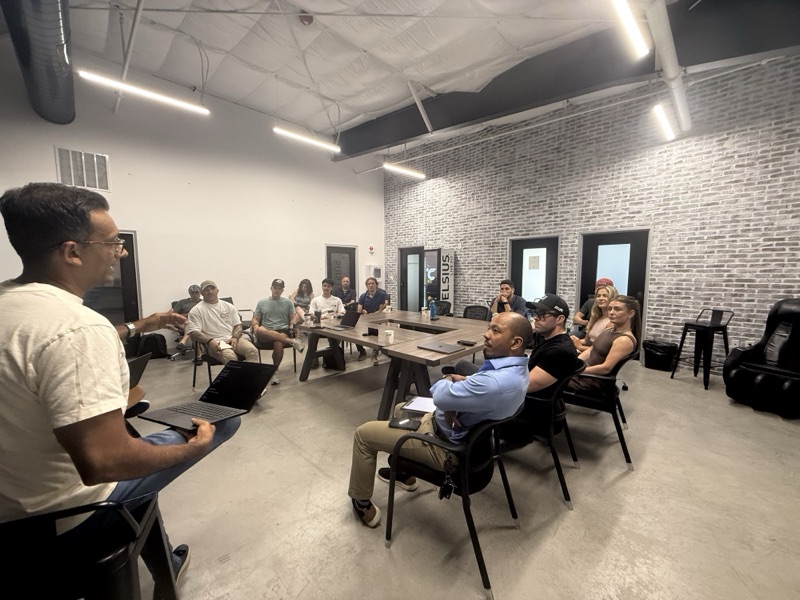
Sharing business knowledge is valuable on its own, but repeated conversations can also help entrepreneurs develop stronger professional relationships.
A single networking event may introduce founders to people with useful experiences. Continued interaction allows those relationships to develop beyond an initial introduction.
Over time, founders can learn more about one another's businesses, understand their areas of experience, and recognize opportunities to exchange perspectives.
This creates a foundation for relationships based on mutual understanding rather than immediate commercial expectations.
Developing Trust Through Consistent Conversations
Trust develops when people have opportunities to interact, listen, and understand one another.
For founders, recurring networking events can provide a setting for these relationships to grow.
An entrepreneur may initially connect with another business owner through a conversation about hiring. At a later gathering, they might discuss leadership, business operations, or a different challenge.
As the relationship develops, both individuals gain a better understanding of each other's experiences.
Meaningful founder relationships often involve:
- Listening to different viewpoints
- Sharing relevant experiences openly
- Asking thoughtful questions
- Respecting different business priorities
- Maintaining connections beyond an initial introduction
These habits help create a professional network where conversations are useful even when no immediate business opportunity exists.
Learning Across Industries and Business Models
Founders do not need to operate similar businesses to exchange valuable insights.
An entrepreneur managing a professional service company may approach customer relationships differently from someone operating a technology business.
A founder who has built a company without outside funding may have a different perspective on growth than someone following another financing model.
These differences can make conversations more informative.
A business owner may discover a new approach to organizing work, managing customer expectations, or evaluating operational priorities simply by speaking with someone outside their industry.
Not every idea will transfer directly. Founders still need to consider their own business models, resources, and circumstances.
However, learning how other entrepreneurs solve problems can challenge assumptions and introduce possibilities that might otherwise remain unexplored.
Turning Founder Connections Into a Personal Board of Directors
As founders develop relationships with other entrepreneurs, their professional network can become a valuable source of perspective.
This idea is sometimes described as building a personal board of directors.
Unlike a formal corporate board, a personal board of directors is an informal network of trusted people whose experiences and judgment a founder values.
These individuals may have different business backgrounds, leadership experiences, and areas of knowledge.
The purpose is not to create a formal advisory organization. It is to develop relationships with people who can offer useful perspectives when important questions arise.
Building a Network With Complementary Experience
A founder's professional network becomes more useful when it includes people who bring different strengths.
For example, an entrepreneur might develop relationships with:
- An experienced founder who has managed significant business growth
- A business owner navigating similar operational challenges
- Someone who has built and sold a company
- An entrepreneur from a different industry
- A newer founder experimenting with different approaches
Each connection may offer a distinct perspective.
Someone experienced in managing teams may help a founder think through leadership responsibilities. Another entrepreneur may share lessons about business processes or changing strategic priorities.
The founder remains responsible for making decisions, but access to varied experiences can help them evaluate those decisions more carefully.
Making Peer Learning an Ongoing Practice
Building a useful founder network requires more than collecting contacts.
Relationships become meaningful through repeated interactions, genuine interest, and a willingness to contribute.
Founders can make peer learning part of their professional development by attending recurring gatherings, following up on interesting conversations, and maintaining connections with entrepreneurs whose perspectives they value.
This approach also encourages reciprocity.
Even founders who are relatively new to entrepreneurship have experiences and observations that may be useful to others.
An effective professional network is not built entirely around asking for advice. It also involves sharing knowledge, listening carefully, and contributing when another entrepreneur could benefit from a different perspective.
Over time, these relationships can become an informal circle of people with whom a founder can exchange ideas and discuss business challenges.
Share Business Insights With Austin Founders at Network of Directors
Building a business requires independent thinking, but that does not mean every challenge must be approached alone.
Connecting with entrepreneurs who have different experiences can help founders evaluate decisions, recognize new possibilities, and understand how other businesses navigate similar challenges.
The most valuable relationships often begin with genuine conversations rather than sales presentations.
Network of Directors brings Austin entrepreneurs together through free monthly networking events at North Kollective, located at 9185 Research Blvd., Austin, TX.
The gatherings feature a live founder interview and opportunities for business owners to connect, share experiences, and learn from one another. Founders at different stages are welcome, with no application, invitation, or minimum revenue requirement.
Whether you are starting your first company or managing an established business, these conversations offer opportunities to hear different perspectives and develop meaningful connections.
Join an upcoming Network of Directors gathering in Austin and start building your personal board of directors through genuine founder conversations.
Frequently asked questions
Why is sharing business insights among founders important?
Sharing business insights helps entrepreneurs learn from experiences outside their own companies. These conversations can introduce different strategies, highlight potential challenges, and provide perspectives that support more informed business decisions.
How can Austin founders learn from experienced entrepreneurs?
Founders can attend business networking events, participate in founder-led discussions, and build relationships with entrepreneurs who have navigated similar challenges. Asking thoughtful questions about real experiences can make these interactions more useful.
What makes founder-led networking different from traditional business networking?
Founder-led networking places greater emphasis on entrepreneurial experiences, peer learning, and business conversations. Traditional networking formats may focus more heavily on commercial introductions or sales opportunities, although individual events vary.
Can early-stage entrepreneurs benefit from networking with established founders?
Yes. Experienced entrepreneurs can provide perspective on hiring, operations, leadership, and business growth. Newer founders can also contribute fresh ideas and different approaches, making the exchange valuable in both directions.
What is a personal board of directors for a business founder?
A personal board of directors is an informal network of trusted entrepreneurs and business professionals whose experiences can provide perspective on business decisions. It is not the same as a formal corporate board.